
Memory, History and the Future
Nineteen Eighty-FourTheme flow on the struggle between the Party's control of the past and the individual's fragile memory.
increasing Bearing strength in each event
 decreasing
Bearing strength in each eventdecreasingWho Controls the Past
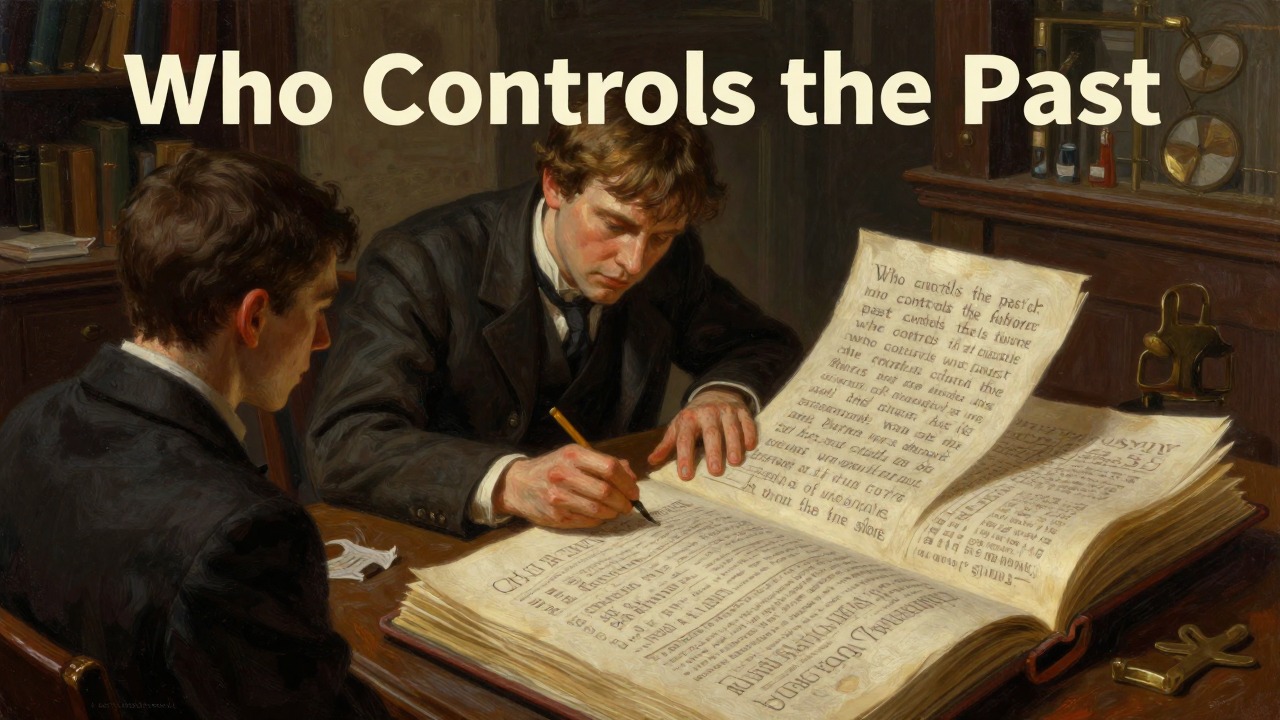
Who Controls the Past
The Maxim
The Party slogan states: 'Who controls the past controls the future: who controls the present controls the past.' It is the core of Ingsoc's governance.
The Mechanism
All records are destroyed or falsified, and memories are continuously trained. The past is whatever the Party says it was.
The Consequence
Winston understands that if the Party can erase his memory, it can erase his future. His own mind is the only record he can trust, and it is under attack.
The Photograph as Fossil
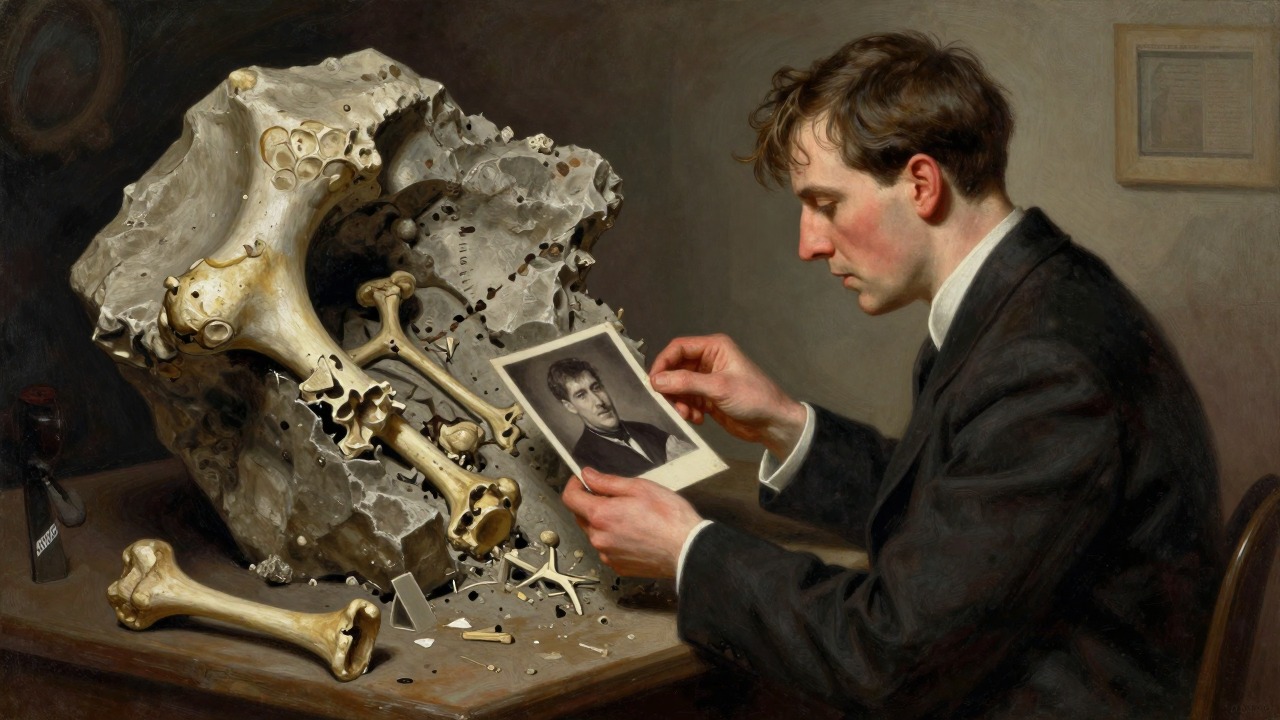
The Photograph as Fossil
The Concrete Fragment
The photograph of Jones, Aaronson and Rutherford is a fossil bone in the wrong stratum, destroying a geological theory. It cannot be denied, only destroyed.
The Choice
Winston destroys the photograph, but the memory of it remains. He believes that the memory of a fact is enough to prove the fact once existed.
The Uncertainty
O'Brien later destroys even that certainty by denying the memory. The past becomes a liquid thing that can be poured into any shape.
The Old Man's Useless Memories
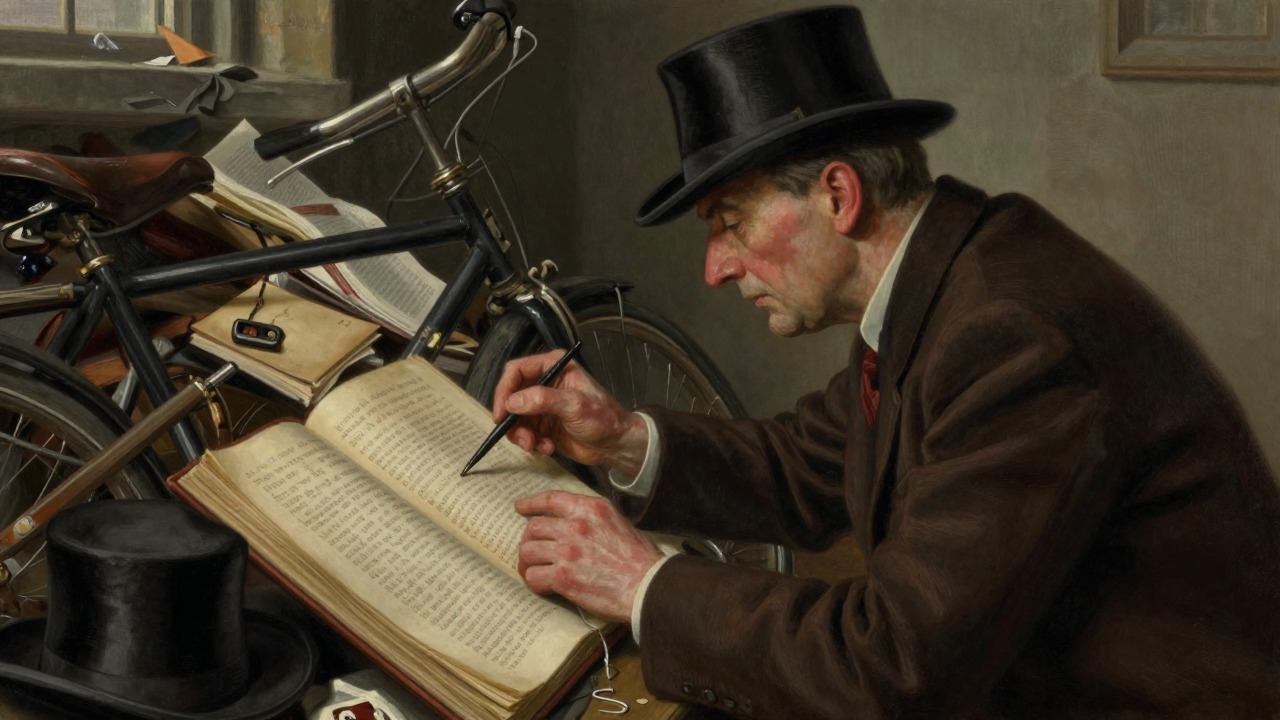
The Old Man's Useless Memories
The Rubbish Heap
Winston asks an old prole about life before the Revolution, but the man can only recall irrelevant details: a lost bicycle pump, a quarrel, the smell of a top hat. He cannot compare eras.
The Erasure
Without records and without interpreters, the old man's memories are useless. They are lost to history, like the rhyme of St Clement's without its bells.
The Lesson
The Party does not need to kill the old; it only needs to make their memories worthless. The link with the past is broken, and the future is empty.
The Place Without Darkness
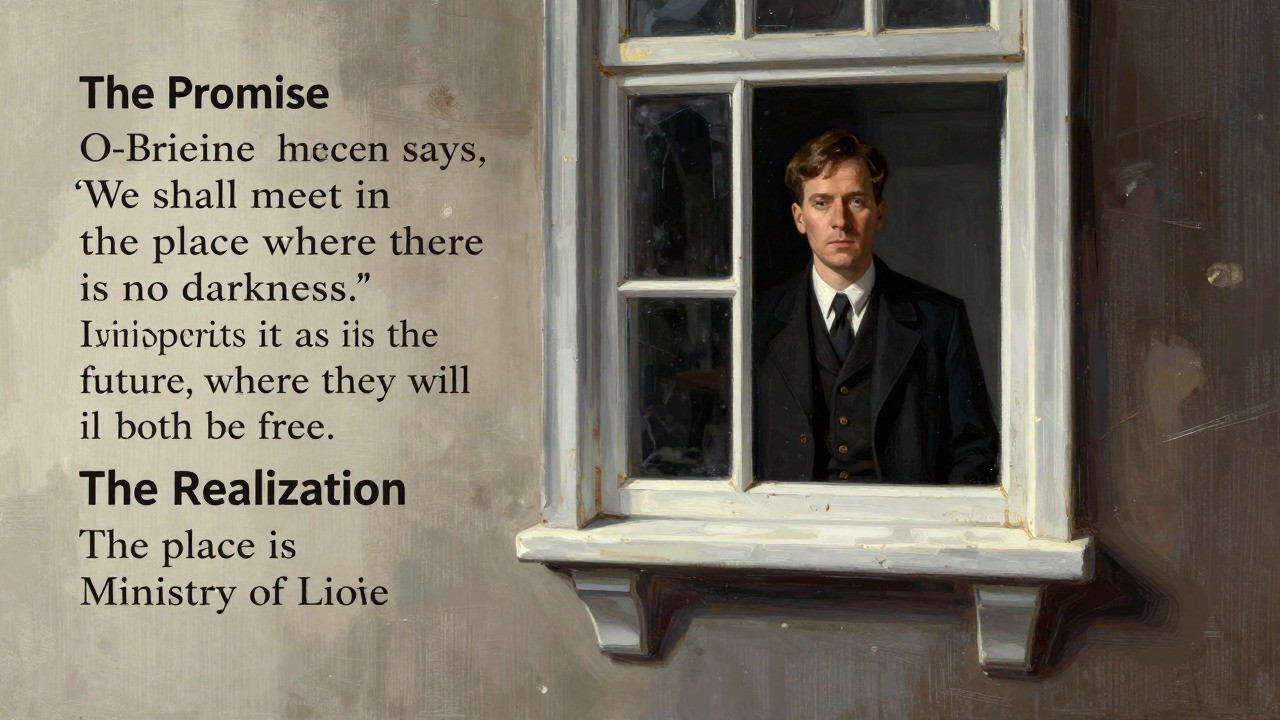
The Place Without Darkness
The Promise
O'Brien says, 'We shall meet in the place where there is no darkness.' Winston interprets it as the future, where they will both be free.
The Realization
The place is the Ministry of Love, a windowless cell of white porcelain, lit forever. There is no darkness, but there is also no escape.
The Meaning
The future is not a refuge; it is a prison. Winston's hope for a future with truth is replaced by a future of permanent surveillance.
the Party's slogan in Chapter III
Winston's discovery
the pub scene
recurring dream and promise
